

NEW PRODUCTS
Fluorescent Brightener 71
Hosea Chem® supplies Fluorescent Brightener 71, CAS 16090-02-1, also known as Fluorescent Brightener 260 and Fluorescent Whitener CXT, for textile, paper, detergent and other water-soluble fluorescent whitening applications with bulk supply from China. Send Inquiry
Product Description
Fluorescent Brightener 71, CAS 16090-02-1
Fluorescent Brightener 71 is a water-soluble fluorescent whitening agent based on a sulfonated stilbene-triazine structure. It is commonly known as Fluorescent Brightener 260, Fluorescent Whitener CXT, Optical Brightener DMS, C.I. Fluorescent Brightener 71, Tinopal DMS and Belotex KD. Chemical reference databases list CAS 16090-02-1 under the name Fluorescent Brightener 71.
Product Chemical Properties
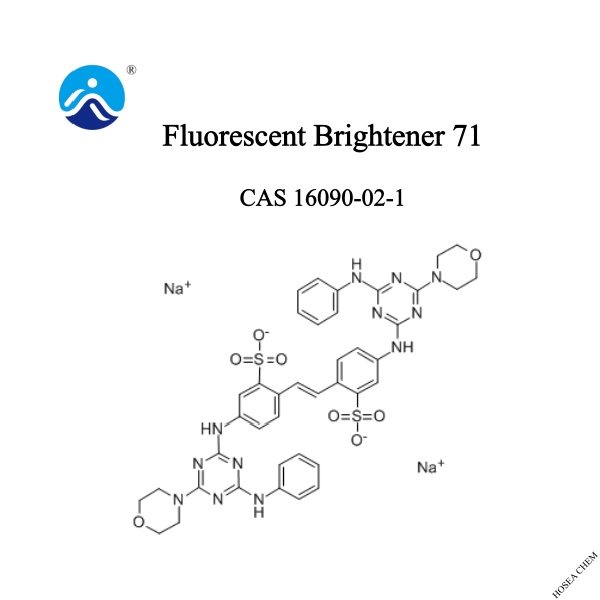
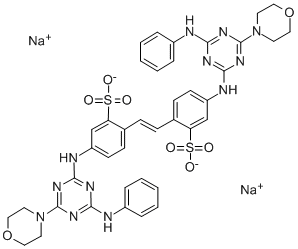
Chemical Name: Disodium 4,4'-bis[(4-anilino-6-morpholino-1,3,5-triazin-2-yl)amino]stilbene-2,2'-disulphonate
Product Name: Fluorescent Brightener 71
CAS No.: 16090-02-1
Synonyms: Fluorescent Brightener 260, Fluorescent Whitener CXT, Optical Brightener DMS, Optical Brightener 71, C.I. Fluorescent Brightener 71, C.I. Fluorescent Brightener 260, Tinopal DMS, Tinopal DMS-X, Tinopal AMS, Uvitex SDG, Belotex KD, Blankophor BBH, Photine CBUS-3B, MBBH 766
Molecular Formula: C40H38N12Na2O8S2
Molecular Weight: 924.92 g/mol
EC No.: 240-245-2
IUPAC Name: Sodium (E)-6,6'-(ethene-1,2-diyl)bis(3-((4-morpholino-6-(phenylamino)-1,3,5-triazin-2-yl)amino)benzenesulfonate)
Chemical Type: Water-Soluble Fluorescent Whitening Agent
Main Function: Fluorescent Whitening Agent / Optical Brightener
Maximum UV absorption wavelength: 350nm
Product Technical Specification
For detergent For textiles
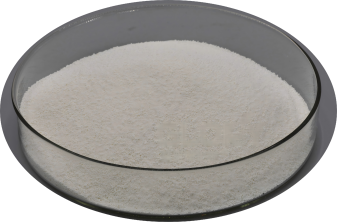
Appearance White or light yellow uniform powder or granules
UV absorption (E) ≤ 416
Whitening strength (standard product), points -- 113
Color light (standard product) -- Approximate ~ micro
Moisture content, % ≤ 5.0
Water-insoluble impurities content,% ≤ 0.5
Fineness(pass 425mm Residue of aperture sieve),% ≤ 5.0
Performance Characteristics
Fluorescent Whitening Agent DMS is currently considered an excellent whitening agent for detergents. The incorporation of morpholine groups into its molecular structure enhances several of its properties; for instance, it offers improved acid resistance and excellent stability in the presence of perborates. It is suitable for whitening cellulosic fibers, polyamide fibers, and their fabrics. DMS is anionic in nature and produces a blue-toned fluorescence. It exhibits good resistance to chlorine bleaching—outperforming agents like VBL and No. 31—and offers a light fastness rating of Grade 4. It performs optimally in dye baths with a pH of 7–10. A key advantage of using DMS in laundry powder is its high compatibility; it allows for high dosage levels and delivers superior cumulative whitening effects, meeting the requirements of any formulation in the detergent industry.
Applications
1. Suitable for use in detergents; when incorporated into synthetic laundry powders, bar soaps, or toilet soaps, it imparts a clean, attractive, bright, and lustrous appearance.
2. Used for whitening fabrics such as cotton and nylon; it provides excellent whitening effects on man-made fibers, polyamide, and vinylon, as well as good results on protein fibers and amino plastics.
Usage Instructions
Fluorescent Whitening Agent DMS has lower water solubility than agents VBL and No. 31; it can be prepared as a suspension (approximately 10% concentration) using hot water. Once prepared, the solution should be used promptly and protected from direct sunlight. Typical dosage levels are 0.08–0.4% for laundry powders and 0.1–0.3% for textile printing and dyeing applications.
Packaging
10 or 25kg/Carton or Drum.
Production Capacity
4800MT/year.
Storage Requirements
Store Fluorescent Brightener 71 in tightly sealed original containers in a cool, dry and well-ventilated area.
Protect the product from moisture, excessive heat and direct sunlight.
Keep containers properly closed when not in use.
Fluorescent Brightener 71 Bulk Supply from China
Hosea Chem® supplies Fluorescent Brightener 71, CAS 16090-02-1, also known as Fluorescent Brightener 260, Fluorescent Whitener CXT, Optical Brightener DMS and Tinopal DMS, for textile, paper, detergent and other water-soluble fluorescent whitening applications.