

NEW PRODUCTS
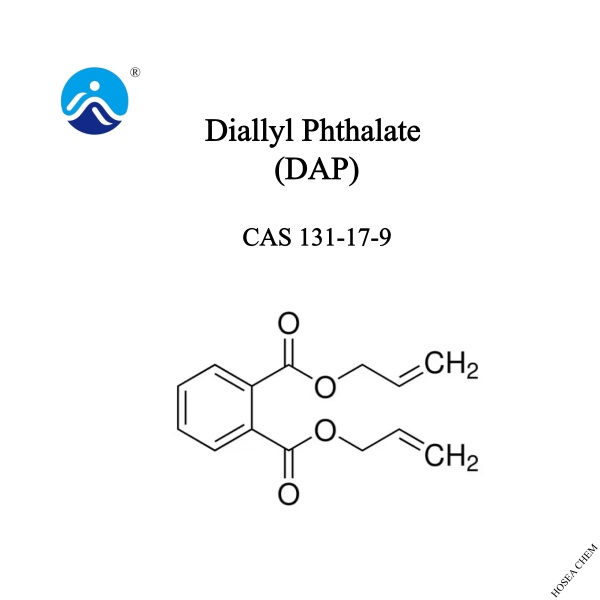
Diallyl Phthalate (DAP)
Hosea Chem® supplies Diallyl Phthalate (DAP), CAS 131-17-9, a reactive monomer and specialty chemical for thermosetting resin, polymer and molding applications, with reliable bulk supply from China. Send Inquiry
Product Description
Diallyl Phthalate (DAP), CAS 131-17-9
Diallyl Phthalate (DAP), CAS 131-17-9, is an organic phthalate ester and reactive monomer widely used in thermosetting resin and polymer applications.
DAP can be polymerized or copolymerized and is commonly used in the production of Diallyl Phthalate resins and thermosetting molding materials. It can also be used in selected unsaturated polyester systems and other polymer formulations where crosslinking and improved material performance are required.
Diallyl Phthalate is valued for its application in polymer materials requiring good dimensional stability, heat resistance, electrical properties and chemical resistance. The product is generally supplied as a colorless to pale yellow clear liquid.
Product Chemical Properties
Product Name: Diallyl Phthalate (DAP)
CAS No.: 131-17-9
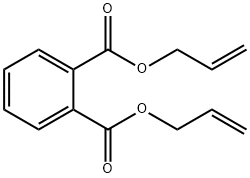
Molecular Formula: C14H14O4
Molecular Weight: 246.26
Chemical Name: Diallyl Phthalate
Synonyms: DAP, Diallyl Phthalate Monomer, Phthalic Acid Diallyl Ester, Allyl Phthalate, Diallyl Ester of Phthalic Acid, DAP Monomer
Product Technical Specification
Appearance: colorless or light yellow transparent oily liquid
Assay: ≥99.5%
Moisture: ≤0.1%
Boiling Point: 157-165°C
Density (20°C): 1.120±0.003
Viscocity (20°C, Mpa.s): 12-14
Flash Point (open cup): 163°C
Freezing Point: -70°C
Self- ignition: 435°C
Surface Tension (dyn/cm): 39(20°C)
Refractive Index (25°C): 1.516-1.518
Coefficient of Heat Expansion (20-40°C): 0.00076/°C
Diallyl phthalate (DAP) is a colorless or pale yellow transparent liquid. Each molecule contains two allyloxy groups; while relatively stable at room temperature, it exhibits high reactivity when heated in the presence of an initiator, enabling the production of novel materials for specialized applications.
When used as a monomer, its key characteristics are as follows:
1. It contains allyl groups, allowing for easily controlled polymerization through heating and the addition of organic peroxides.
2. Due to its high stability at room temperature, it can serve as an anti-gelling agent for vinyl monomers such as styrene and vinyl esters.
3. It has low vapor pressure and is virtually odorless, avoiding the pungent smell associated with styrene.
4. It has a very high flash point, posing minimal fire risk.
5. The resulting polymers exhibit high strength and good toughness.
6. The resin demonstrates excellent resistance to sunlight, acids, and alkalis.
When used as a plasticizer (internal plasticizer), it offers the following characteristics:
Advantages—no deformation after molding and excellent dimensional stability; superior electrical properties, maintaining good electrical insulation even in high-temperature and high-humidity environments; excellent thermal stability, retaining flexural strength during continuous use at temperatures between 150°C and 200°C; and resistance to chemical attack and solvent extraction.
Applications of Diallyl Phthalate (DAP)
DAP has a wide range of applications; it serves as a cross-linking agent and plasticizer for unsaturated resins, an internal plasticizer for PVC resins, and a reinforcing agent for fiber resins. It can undergo self-polymerization to act as a reinforcing agent and also functions as an auxiliary cross-linking agent for synthetic rubber. Key applications include:
1. Synthesis of acrylic resins
Used in acrylic-based synthetic resins—such as textile printing clear pastes and waterproof adhesives—DAP helps improve resin adhesion, water resistance, and gloss, while enhancing fluidity and adjusting viscosity. It can be added via dropwise addition alongside other monomers or incorporated at a later stage. A drawback is that the resin drying speed can sometimes be slow.
2. Unsaturated polyester resins
In the production and use of unsaturated polyester resins, DAP serves as a cross-linking agent, an internal plasticizer (reactive plasticizer), a dispersing agent for dyes and catalysts, and an anti-gelling agent for vinyl monomers like styrene. Compared to styrene-based cross-linking, DAP-based cross-linking yields products with superior electrical properties, heat resistance, and dimensional stability. As a dispersing and anti-gelling agent, DAP is highly stable at room temperature; due to its high boiling point and low volatility, it resists curing at ambient temperatures even in the presence of catalysts, requiring heat to cure. Consequently, it is suitable for producing premixed or pre-impregnated unsaturated polyester resins, as well as for applications such as insulating varnishes and hardened wood production.
3. Internal plasticizer for polymers
DAP acts as an internal plasticizer for polymers—such as PVC—imparting excellent heat resistance, light stability, solvent resistance, and electrical properties to the finished products. It is widely used in sealants for automobiles and refrigerators, foamed wallpaper, and artificial flooring. A disadvantage is that it exhibits higher migration rates than DOP.
4. Self-polymerized polymers
DAP's self-polymerized products (prepolymers) offer excellent heat resistance, plasticizing effects, toughness, and dispersibility. They are widely used in molding materials, decorative laminates, UV-curing inks, and coatings.
Packaging
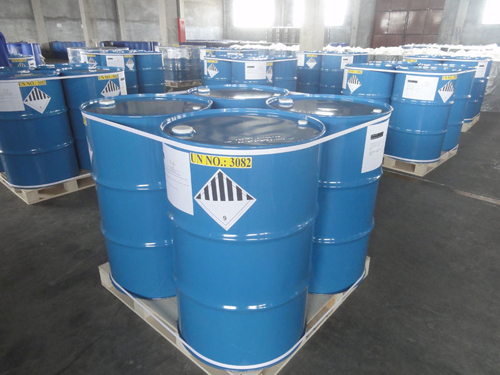
200kg steel drums, or 25kg plastic drums.
Production Capacity
12000 MT per year.
Storage Requirements
DAP should be stored in a well-ventilated, dry area. It has a high flash point and is stable under normal storage conditions, but it should be kept away from light and heat, as well as strong oxidizing agents, strong acids, and strong bases.
Diallyl Phthalate (DAP) Bulk Supply from China
Hosea Chem® offers Diallyl Phthalate (DAP), CAS 131-17-9, in bulk quantities with competitive pricing and reliable export service.
We support international shipments in suitable packaging options. TDS, MSDS and COA are available upon request.
Contact Hosea Chem for the latest Diallyl Phthalate price, bulk quotation, availability and technical documents.