

NEW PRODUCTS
Lithium Iodide
Hosea Chem® has been supplying Lithium Iodide (CAS 10377-51-2) with high quality and competitive price for many years, covering most of the European, American, middle east, etc. Send Inquiry
Product Description
Lithium Iodide
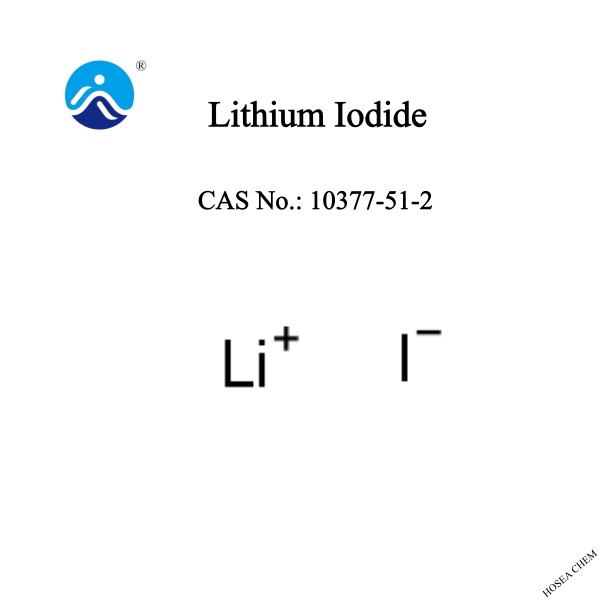
Lithium Iodide (CAS 10377-51-2) is a white crystal. Lithium iodide (Molecular Formula: LiI) is the compound of lithium and iodine. It can be used as an electrolyte in high-temperature batteries, long-life batteries which is required, e.g. by artificial pacemaker as well as in the electrolyte of dye-sensitized solar cells.
In organic synthesis, it can be used for C-O bonds cleavage such as converting methyl esters to carboxylic acids.
In addition, as the radio contrast agent for X-ray computed tomography imaging studies.
Physical properties:
Lithium Iodide is easy to deliquesce, and will turn yellow when exposed to light for a long time. The powder is soluble in water, alcohol, acetone, and ether. When melted, it is corrosive to glass and ceramics. Lithium iodide, a white crystalline solid, is deliquescent as are lithium chloride and lithium bromide. Lithium iodide is readily oxidized in air to yield iodine which discolors the crystals.
Specification of Product
Product Name : Lithium Iodide

CAS No.: 10377-51-2
EINECS: 233-822-5
Molecular formula: LiI
Molecular Weight: 133.85
Density 3.49 g/mol
Melting point 446 °C
Boiling point 1171 °C
Solubility Soluble in water, alcohol and acetone
Lithium Iodide Specification
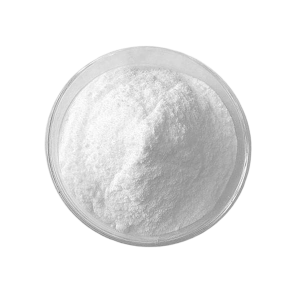
Appearance: White crystalline powder, hygroscopic, turns yellow upon exposure to light or prolonged storage.
Purity: ≥ 99.9%
Lithium Iodide Packaging & Storage:
25Kg/ Drum
Keep the storage container tightly sealed. Store in a cool, dry place.
Lithium Iodide Application:
Lithium Iodide Powder is mainly used in the pharmaceutical industry, the photography industry, and raw materials for lithium battery manufacturing.
As a absorbent in refrigeration process, as a catalyst, and in photography.
And it is also useful for organic synthesis, pessat iodination, cleavage of esters, ethers, epoxides, decarboethoxylation, carbonylation, and aldol condensation.
Use for manufacturing medicines and mineral waters.
And It is used in electochemicstry and redox reactions.
Lithium iodide is also a catalyzed conjugate addition reaction of β-dicarbonyl compounds. It is also useful for tetrathioquinodimethane.