

NEW PRODUCTS
Aluminum Fluoride
Hosea Chem® has been supplying Aluminum Fluoride (CAS 928-96-1) with high quality and competitive price for many years, covering most of the European, American, middle east, etc. Send Inquiry
Product Description
Aluminum Fluoride
Aluminum fluoride products can be divided into anhydrous aluminum fluoride, dry-process aluminum fluoride, and wet-process aluminum fluoride. Anhydrous aluminum fluoride has a high main content and extremely low impurity content, which can effectively adjust the electrolyte molecular ratio, reduce hydrolysis losses in aluminum electrolysis production, improve aluminum ingot quality, and reduce production costs, representing the development direction of aluminum fluoride salt products.
Specification of Product
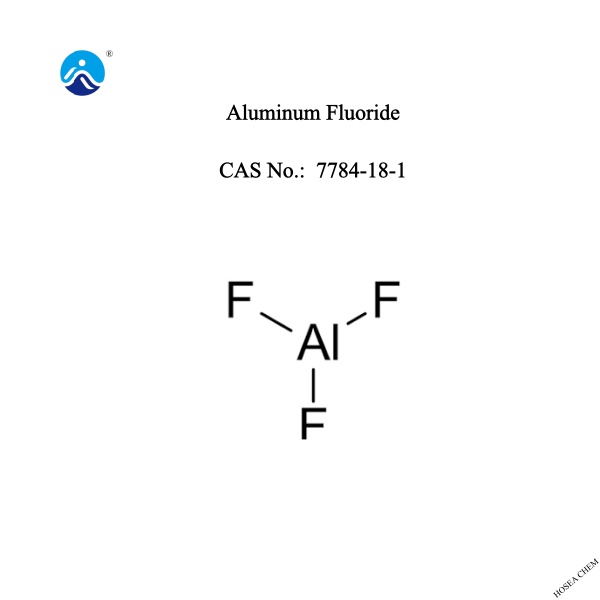
Product Name : Aluminum Fluoride
Aluminum fluoride anhydrous
Alu Fluoride
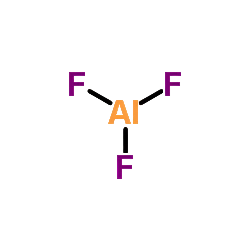
CAS No.: 7784-18-1
EINECS No.: 232-051-1
Molecular Formula: AlF3
Molecular Weight: 83.98
Aluminum Fluoride Packaging
1250Kgs/Bag, 25MT/20’FCL
1500Kg/Bag
Product specification
Grade AF-0
Appearance: White Powder
AlF3: 90% MIN
F: 61.10% MIN
Al: 31.5% MIN
Na: 0.40% MAX
SiO2: 0.10 MAX
Fe2O3: 0.05% MAX
SO42-: 0.50% MAX
P2O5: 0.03% MAX
CaO: 0.06% MAX
H2O: 0.50% MAX
AlF3+Al2O3: 98% MIN
Ig. Loss at 550℃: 0.50% MAX
Flowability: 60S for 1kg/Max
Bulk Density: 1.3g/cm3~1.6g/cm3
Angle of Repose: 35 Max
+150um: 10%Max
-45um: 10%Max
Aluminum Fluoride Applications
In the aluminum electrolysis industry, it is used to lower the melting temperature of the electrolyte and increase its conductivity; it is also used as a flux for non-ferrous metals, a fluxing agent and component of ceramic and enamel glazes, and an inhibitor of by-fermentation in essential oil production.
In alcohol production, Aluminum Fluoride is used as an inhibitor of by-fermentation.
Aluminum Fluoride is used in welding fluxes in metal welding.
Aluminum Fluoride is used in the manufacture of optical lenses.
Aluminum Fluoride is also used as a catalyst in organic synthesis and as a raw material for synthetic cryolite, etc.